Graduate School Application Timeline
Applying to graduate school is a marathon, not a sprint. Whether you are aiming for a Master's degree, a Ph.D., or Law School, the most successful applicants typically start preparing over a year in advance.
Use this timeline to break down the application process into manageable steps.
Junior Year (or earlier)
- Focus on Academics & Research: Maintain a strong GPA and actively seek out hands-on experience. Join a research lab as a research assistant, secure a field study placement that is relevant to your goals, or consider completing an honors thesis. The goal is to build a strong foundation of experience that proves you are ready for graduate-level work.
- Build Your Master Spreadsheet: Being organized early will greatly help you later on. Create a spreadsheet to track program names, application deadlines, required standardized tests, and application fees. For research-focused degrees, include a column for specific faculty members whose work aligns with your interests. It can also be helpful to make note of anything about a specific program that stands out to you, as this will help you craft your personal statements.
- Build Relationships: Your professors, lab directors, and supervisors will eventually be your letter writers. Attend office hours, ask thoughtful questions about their career paths, and be a reliable contributor to your classes, research roles, and other professional positions.
Junior Summer
- Standardized Testing: Determine as early as possible if your target programs require the GRE, LSAT, or other exams. Dedicate the summer to studying and taking the test. It is typically recommended to spend around 50 to 200 hours preparing for the GRE and 250 to 300 hours preparing for the LSAT. Keep this in mind as you build your timeline, and start studying earlier if you want a lighter weekly load. Testing over the summer leaves a good buffer in the case that you want to retake the exam in early fall.
- Narrow Your List: Take your broad list of programs that you came up with earlier and focus on around 5 to 10 schools (could be more or fewer, depending on your field and how many programs you think you can reasonably apply for). Evaluate the programs based on curriculum, faculty research match, location, funding opportunities, and career outcomes. Keep in mind that for research-based programs such as Ph. D.s, professors typically do not take students each year, so you will also have to check whether the professors you are interested in have openings.
- Draft Your Essays: Begin writing your Statement of Purpose and/or Personal Statement (depending on the program requirements). The first draft is always the hardest, so just try to get your ideas written down. Focus on your research or professional goals and what makes you a unique fit for each program.
- Build Your "Brag Sheet": Update your CV or resume and create a summary document for your future letter writers that highlights your key coursework, lab experience, career goals, campus involvement, and any other relevant information to help them. The easier you make it for them to write a strong letter, the better the letter will be.
Senior Fall
- Formally Ask Your Letter Writers: Officially reach out to your letter writers at least 4 to 6 weeks before your first deadline. Provide them with your "brag sheet," transcripts, drafts of your essays, and a clear list of deadlines and submission instructions for each program you are applying for.
- Order Transcripts: Check if your programs require official or unofficial transcripts for the initial application. Request official transcripts from UCI (these are typically free), as well as any other college you previously attended, well in advance so they arrive on time.
- Refine Your Essays: Edit your essays as much as you can. Have career services or writing center staff, mentors, faculty members, family, and friends review your statements. Tailor each essay explicitly to the school you are applying to. Programs are looking for you to tell them why you are a perfect fit for their specific school and not just for your general field.
- Submit Your Applications: Aim to submit a few days before the actual deadline to avoid any last-minute technical issues. Pay close attention to early or priority deadlines, as these may give you a better chance of admission and are often tied to fellowships, grants, or priority funding.
- Send Reminders: Send a polite, gentle nudge to your letter writers one to two weeks before the deadline to ensure your recommendations are submitted on time. Thank them again for their support.
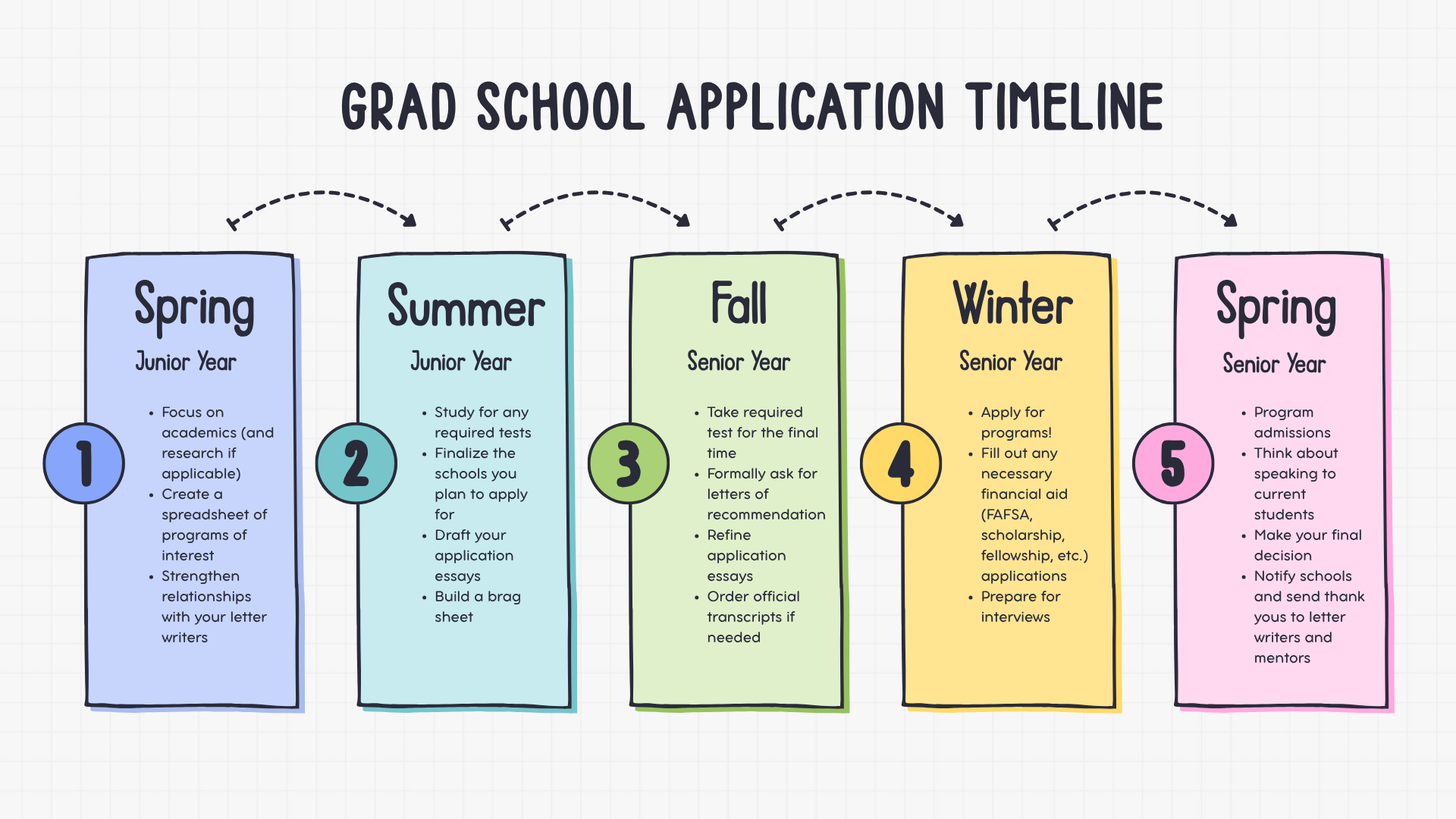
Come meet with us for help creating your personal timeline, narrowing down your list, or reviewing your essays!